
For many families, the question doesn’t come all at once.
“Is it time for in-home care?” often begins as a quiet thought, something noticed, then set aside, then noticed again.
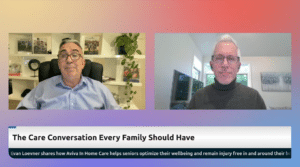
In a recent conversation, Aviva In-Home Care founder Evan Loevner shared his perspective on how families can recognize the right time to bring in support and how approaching care proactively can make all the difference.
What follows reflects that guidance.
The Moments That Signal It May Be Time
Sometimes, the need for in-home care for a loved one is unmistakable.
A fall. A hospital stay. An injury that changes what daily life looks like overnight.
In these moments, families often seek short-term home care after hospitalization, support that helps a loved one recover safely at home, regain strength, and avoid further setbacks.
But not every situation is so clear.
More often, the signs are subtle. A gradual shift in memory. A noticeable decline in mobility. A home that feels harder to keep up with. Or a loved one who is spending more time alone, less engaged, and increasingly isolated.
These quieter changes are just as important.
They are often the earliest indicators that additional support could help preserve safety, independence, and overall well-being.
Why Starting Earlier Changes Everything
One of the most common patterns families experience is waiting too long.
Care decisions are frequently made in moments of urgency, when options feel limited and time is short.
When a crisis occurs, families may feel like they are making decisions with their backs against the wall, trying to quickly understand senior home care services while managing an already stressful situation.
There is another way.
Starting the conversation earlier, when changes are first noticed, creates space for thoughtful planning. It allows families to explore home care services without pressure, ask questions, and understand what support could look like before it becomes essential.
This proactive approach doesn’t just make the process easier. It often leads to better outcomes, smoother transitions, and a stronger sense of control for everyone involved.
What Thoughtful Care Should Feel Like
Reaching out for home care can feel overwhelming at first. Many families don’t know what to expect or how the process works.
The right experience should feel the opposite.
It should begin with a conversation, not a transaction. A chance to ask questions, share concerns, and gain clarity without pressure.
From there, care should be built around the individual, not the other way around.
Understanding someone’s daily routine, their preferences, their personality, and their history is just as important as understanding their medical needs. True personalized in-home caregiving takes all of this into account.
It’s about creating a plan that fits naturally into someone’s life, one that supports independence while enhancing safety and comfort.
The Role of Clinical Insight in Non-Medical Care
While home care is often described as “non-medical,” the reality is that health and safety are always part of the picture.
Changes in mobility, memory, or daily function are often connected to broader health patterns. Without the right oversight, small issues can quickly become larger concerns.
That’s why a higher standard of home care services includes clinical awareness.
Having experienced professionals involved in care planning and oversight allows for:
- Early identification of potential health risks
- Alignment with physician recommendations
- Adjustments to care as needs evolve
- A stronger focus on preventing injury and avoiding rehospitalization
This kind of structure doesn’t replace medical care; it strengthens it. It creates a more connected, informed approach that supports the individual as a whole.
Care That Evolves Alongside the Individual
One of the most important aspects of quality senior home care is flexibility.
Needs change. Sometimes gradually, sometimes quickly.
Care that works well today may need to be adjusted tomorrow, and that’s not a failure of the plan. It’s a natural part of the process.
Ongoing communication and regular check-ins ensure that care continues to reflect what is truly needed. Whether someone is recovering from a health event, managing a chronic condition, or simply navigating the natural changes that come with aging, care should evolve alongside them.
For families, this creates reassurance.
It means they are not left to figure things out on their own as circumstances shift.
More Than Care – A Partnership
At its best, in-home care for aging parents is not just about assistance with daily tasks.
It’s about partnership.
It’s about having someone in your corner who understands the nuances of care, who can help guide decisions, and who takes the time to listen, not just to what is said, but to what is felt.
This kind of support often extends beyond traditional caregiving. It may include helping families think through next steps, offering perspective during uncertain moments, or simply being a consistent, trusted presence.
That’s where care becomes something more than a service.
It becomes a relationship.
A More Thoughtful Way to Begin
For families considering in-home care, the first step doesn’t have to be a big one.
It can simply be a conversation.
A chance to ask: What are we noticing? What might we need? What would support look like, now or in the future?
Starting early doesn’t mean committing to immediate care. It means creating awareness, building understanding, and preparing for whatever comes next.
And in many cases, that small step is what makes everything that follows feel more manageable.
Watch the Full Video
There’s more to explore.
To hear these insights directly and gain a deeper understanding of how to recognize the right time for care and what truly sets Aviva apart, watch the full video.
To start the conversation, give us a call today at (415) 463-1400
#AvivaInHomeCareSanFrancisco #LegacyPointMedia #CareForAgingParents #SeniorHomeCare #FamilyCenteredService
If you or an aging loved one are considering Companion Care at Home in Atherton, CA, please contact the caring staff at Aviva In-Home Care today at (415) 463-1400
Aviva In-Home Care provides exceptional senior home care in the Bay Area, including San Francisco, Burlingame, San Mateo, Hillsborough, Atherton, Menlo Park, Palo Alto, Berkeley, Lafayette, Orinda, and surrounding areas.

- Aging in Place: Details Matter - October 9, 2026
- What Are the Benefits of Alzheimer’s Care for Seniors and Families? - September 24, 2026
- In-Home Care Helps Seniors Stay Independent Longer - September 18, 2026